
Intuition vs. Fear: How to Finally Tell the Difference | Sacred Healing
"But how do I know if it's intuition or fear?"
This is the question I get asked more than almost any other.
And I understand why. Because from the inside, especially when you're in the middle of a decision that matter, both voices can sound equally real, equally convincing, equally certain.
Fear says: Wait. You're not ready. What if it goes wrong?
Intuition says: This is the step. You already know.
The words are different. But at 2am, when you're second-guessing yourself for the hundredth time, they can blur into the same anxious noise.
So let me give you something more useful than another think-piece on "trusting your gut." Let me show you how to actually feel the difference.
Why This Question Is So Hard to Answer in Your Head
_________________________________________________________________
The first thing to understand is this: intuition doesn't live in your head.
Neither does fear, really — though fear loves to use your thoughts as its megaphone.
Both of these experiences are fundamentally body-based. They arise as physical sensations before they become stories, interpretations, or the convincing inner voice that tells you what to do.
And that's why trying to think your way to an answer almost never works.
You are trying to solve, with the very mind that generates the confusion, a problem that can only be resolved through the body.
The Physical Signature of Fear
_________________________________________________________________
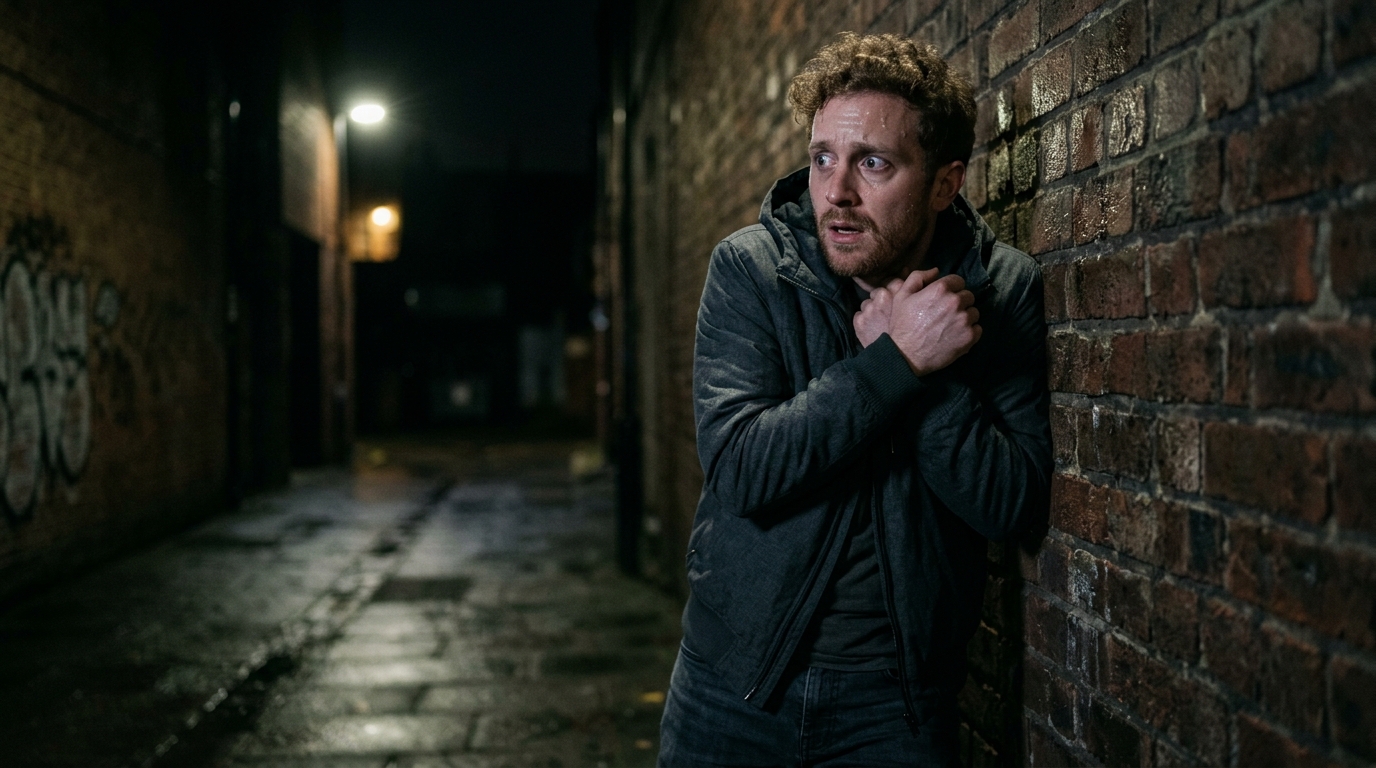
Fear contracts.
When fear is speaking, you'll notice it in the body first: a tightening in the chest, a clenching in the stomach, a shortening of the breath, a feeling of bracing — as if something is about to go wrong and you need to be ready for it.
Fear also has a quality of urgency. It rushes you. It catastrophizes. It takes you into the future — what if this, what if that — and pulls you out of the present moment entirely.
And fear almost always comes with a story. A very convincing, very detailed story about all the ways this could go badly, all the reasons you're not ready, all the evidence from your past that this isn't safe.
Fear speaks in paragraphs. It argues. It defends.
If you find yourself building a case — for or against something — that's usually fear working overtime.
The Physical Signature of Intuition
_________________________________________________________________
Intuition is quieter.
It doesn't argue. It doesn't catastrophize. It doesn't take you into worst-case scenarios.
When intuition speaks, there's a different quality to it. Steadier. More settled.
Even when it's pointing you toward something that frightens you — and it often does — there's a sense of groundedness underneath the fear. A sense of: I already know this, even if I don't want to.
Intuition often feels like a knowing that's been there longer than you've been paying attention to it. A quiet pull in a particular direction that keeps returning no matter how many times you try to ignore it.
Intuition doesn't rush you. It simply remains.
It doesn't need you to make a decision right now. It will still be there tomorrow. And the day after. It's been there all along.
And Then There's Conditioning
_________________________________________________________________
There is a third voice that gets confused for intuition even more often than fear does: your conditioning.
The beliefs you absorbed growing up. The rules of your family system. The unspoken agreements about who you're allowed to be, how much you're allowed to have, what kind of life is available to someone like you.
Conditioning can sound very wise. It can sound like caution, like practicality, like common sense.
"This is too much to hope for. People like us don't do things like this. Who am I to think I could have that?"
These are not your intuition. They are inherited stories — and part of the deeper work of the Soul-Aligned Purpose Method™ is learning to recognize them, name them with compassion, and consciously choose a different story.

A Simple Practice to Begin Distinguishing Them
_________________________________________________________________
The next time you're facing a decision and you can't tell what you're hearing, try this:
Sit down. Close your eyes. Take three slow breaths.
Now bring the decision into your awareness — not to analyze it, but simply to feel it.
Ask yourself: What is my body doing right now?
Is there tightening or expanding?
Is there a sense of bracing or a sense of settling?
Does this feel like urgent noise — or quiet knowing?
Then ask one more question: Has this feeling been with me for a long time — or did it just arrive?
Intuition tends to be patient and persistent. Fear tends to be loud and sudden.
You Already Know
_________________________________________________________________
Here's the thing about intuition that I want to leave you with:
You are not waiting to develop a new ability. You already have this. You have always had it.
What we're doing — in this work, in every step of the Soul-Aligned Purpose Method™ — is clearing away the noise that's been covering it.
The fear. The conditioning. The overthinking that your brilliant mind defaults to when it doesn't feel safe to trust.
Beneath all of that, your inner knowing is intact. It has been waiting patiently. All you have to do is get quiet enough to hear it — and brave enough to act on what you hear.
_________________________________________________________________
Gate 6 of the Soul-Aligned Purpose Method™ is dedicated entirely to Flow & Intuition — including how to hear, trust, and act on your inner guidance with clarity. Join the Sacred Healing newsletter at sacredhealing.life